
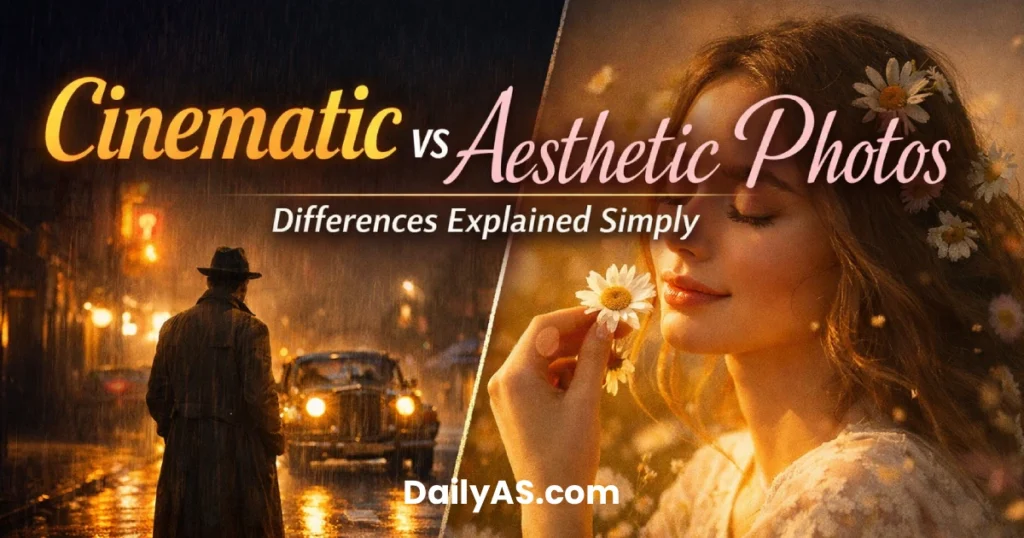
Cinematic vs. Aesthetic Photos: It’s All About Story vs. Mood
Have you ever scrolled through Instagram or Pinterest, seen a stunning image, and wondered, “What makes this look so… different?” Chances are, you’re bumping into two powerful visual languages: cinematic and aesthetic photography.
They both grab your eye, but they speak to you in entirely different ways. One feels like a paused moment from a blockbuster film, rich with unseen narrative. The other feels like a perfect, mood-driven piece of art designed to evoke a specific emotion.
Understanding the difference isn’t just academic—it’s the key to unlocking your own creative vision, whether you’re a hobbyist with a smartphone or a seasoned pro. Let’s break down the cinematic vs. aesthetic photo debate into simple, actionable insights.
The Core Philosophy: Intent Defines Everything
Before we look at colors or composition, we must understand the goal.
Cinematic Photography is about storytelling. Its primary intent is to imply a narrative, a before-and-after, or a character’s journey. A single cinematic frame asks the viewer, “What happens next?” or “What led to this moment?” It borrows the language of cinema—lighting, framing, and color grading—to create a sense of drama and sequence.
Aesthetic Photography is about mood and sensation. Its goal is to evoke a specific feeling—tranquility, nostalgia, chaos, or minimalism—or to celebrate beauty, pattern, and form for its own sake. It asks, “How does this make you feel?” or “Isn’t this visually pleasing?” The focus is often on harmony, color palettes, and immediate visual impact over linear narrative.
Think of it this way: A cinematic photo of a rainy street at night might hint at a detective about to solve a case. An aesthetic photo of the same street would make you feel the loneliness, the chill, and the beauty of the glistening pavement lights.
A Side-by-Side Visual Breakdown
Let’s translate that philosophy into what you actually see in the frame.
| Feature | Cinematic Photos | Aesthetic Photos |
|---|---|---|
| Primary Goal | To tell a story, imply narrative. | To evoke a mood or feeling. |
| Composition | Often uses the rule of thirds to place subjects, with deliberate negative space to suggest “off-screen” action. Dynamic, sometimes unbalanced, to create tension. | Prioritizes clean lines, symmetry, patterns, and balanced elements. Can be minimalist or meticulously curated. |
| Color & Tone | Employs color grading (e.g., teal & orange, desaturated greens, high contrast) to create a specific filmic “look” and emotional tone (warm for nostalgia, cool for suspense). | Focuses on color theory—harmonious palettes (analogous, monochromatic), pastel tones, or bold, contrasting colors for visual pop. |
| Lighting | Dramatic, controlled, and directional. Think chiaroscuro (strong shadows and highlights), rim lighting, or practical light sources (like a lone lamp). Mimics film lighting setups. | Often soft, natural, and diffuse. “Golden hour” is a staple. Can also use bold, graphic light and shadow as a design element itself. |
| Depth & Focus | Uses shallow depth of field (blurry backgrounds) to isolate subjects and guide the viewer’s eye, much like a camera lens in a movie. | Depth of field varies. Can be shallow for focus, or deep to capture every detail of a scene. Focus is on the overall visual plane. |
| Aspect Ratio | Frequently uses widescreen ratios (like 2.35:1 or 16:9) to mimic the cinematic frame. | Typically uses standard photo ratios (4:3, 1:1, 5:4), chosen for platform (Instagram) or compositional balance. |
Where You’ll See Them: Practical Use Cases
Your choice of style should serve your project’s purpose.
Choose Cinematic Photography For:
- Film & Video Promotion: Movie posters, YouTube thumbnail design, behind-the-scenes shots.
- Brand Storytelling: Campaigns that need a narrative arc, like a brand’s origin story or a product’s journey.
- Portraiture with Depth: Character portraits, fashion shoots with a strong narrative theme, or wedding photos that look like film stills.
- Travel Photography that aims to convey the experience and drama of a place, not just its beauty.
Choose Aesthetic Photography For:
- Brand Identity & Mood Boards: Establishing a consistent visual feel (think minimalist tech brands or cozy lifestyle blogs).
- Social Media Feeds & Content Creation: Curating a visually cohesive Instagram grid, Pinterest pins, or TikTok aesthetics.
- Product Photography for e-commerce, especially in niches like home decor, fashion, or beauty where look and feel are paramount.
- Personal Art & Expression: Creating visuals that capture a vibe, a season, or a personal philosophy.
Finding Your Style: Which One Suits You?
Beginners: Start with Aesthetic principles. They are more rooted in foundational photography skills—composition, color, and light observation. Practice by building a cohesive color palette or finding clean, simple compositions in your daily life. It’s highly achievable with a smartphone and natural light.
Intermediate Photographers: This is where you can begin blending both. Use your strong aesthetic sense (color, composition) and layer in cinematic techniques. Try shooting a simple scene in a widescreen crop, or use a single dramatic light source to add narrative tension to an otherwise aesthetic setup.
Experts & Professionals: Your mastery allows you to deploy either style intentionally to meet a client’s strategic goal. You understand that a cinematic look might sell a high-end watch campaign, while an aesthetic flat-lay might dominate its Instagram feed. You seamlessly choose the tool for the job.
Common Mistake to Avoid: Forcing a cinematic look solely through a dark, desaturated filter. Without the supporting narrative composition and lighting, it just looks underexposed. Conversely, an aesthetic photo isn’t just about using a trendy preset; it requires deliberate composition and color harmony.
The Blurred Line: Can You Combine Both?
Absolutely. The most compelling photography often lives at this intersection.
- Imagine a cinematically lit portrait (dramatic side-lighting, shallow depth of field) set within an aesthetically perfect, minimalist room (clean lines, a monochromatic palette). The story is grounded in a palpable mood.
- A travel photo might use a widescreen, cinematic aspect ratio to capture the epic scale of a landscape (story of adventure), while the golden hour light and complementary colors create a warm, serene mood.
The key is to know why you’re choosing each element. Is that wide crop for narrative, or for balance? Is that color palette for emotion, or for a filmic grade?
Quick-Start Actionable Tips
To Try Cinematic Today:
- Crop your next photo to 16:9 or 2.35:1.
- In editing, slightly desaturate the greens and blues.
- Add a subtle, warm highlight to the midtones and a cool tint to the shadows.
To Try Aesthetic Today:
- Find a scene with no more than 2-3 dominant colors.
- Compose your shot to be perfectly symmetrical or using clear, strong lines.
- Edit for color harmony, not realism—push the tones to match your chosen palette.
People Also Ask (FAQ)
Q: Which style is better for Instagram growth?
A: Aesthetic photography has traditionally dominated Instagram due to its focus on cohesive feeds and immediate visual appeal. However, cinematic photos stand out powerfully in Stories and Reels, where storytelling drives engagement. A hybrid approach is often most effective.
Q: Do I need a expensive camera for cinematic photos?
A: Not necessarily. While a camera with good low-light performance helps, cinematic is more about technique than gear. You can achieve cinematic crops, color grading, and composition with a smartphone. The key is understanding lighting and story.
Q: Is one style more “professional” than the other?
A: No. Both are professional tools used at the highest levels. A fashion brand may use aesthetic photography for its lookbook and cinematic photography for its campaign film. It’s about the right tool for the creative and commercial objective.
Q: Can a photo be both cinematic and aesthetic?
A: Yes, and often the most powerful images are. They use aesthetic principles (flawless composition, beautiful color) to serve a cinematic goal (telling a story). The styles are not mutually exclusive but are different layers of visual communication.
We can create any photos in Cinematic or Aesthetic style of your photo then one of the best tool you can use : Gemini
The Final Frame: Your Creative Choice
So, cinematic vs. aesthetic? It’s not about picking a side in a competition. It’s about expanding your visual vocabulary. Cinematic photography is the language of narrative and drama. Aesthetic photography is the language of mood and visual harmony.
The best photographers, like the best writers, are bilingual. They can craft a tense, plot-driven scene (cinematic) and also write beautiful, evocative poetry (aesthetic). Your mission is to understand these dialects so you can express exactly what you intend with your images.
Ready to put this into practice? Grab your camera or phone today. Try to take one photo that tells a mini-story (cinematic) and one that captures a pure, simple mood (aesthetic). Share them, compare them, and see which language feels more natural for your voice. The journey to defining your unique style starts with a single, intentional shot.